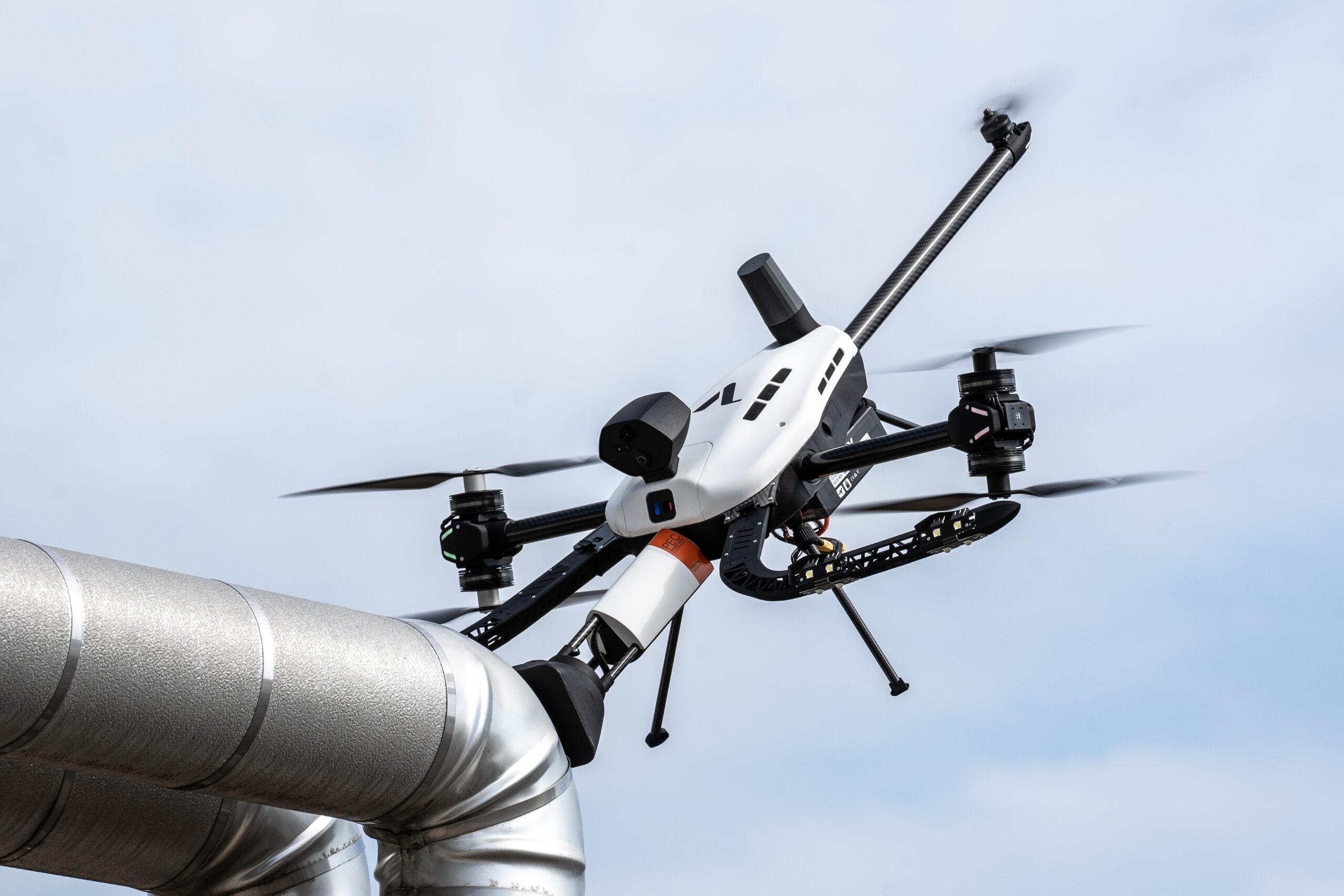
CATSI has expanded its inspection capabilities through a partnership with Voliro, adding aerial robotic Non-Destructive Examination (NDE) for elevated and difficult-to-access industrial assets.
The Voliro T is an aerial robotic inspection platform designed to perform controlled, contact-based measurements directly on asset surfaces. Unlike conventional inspection drones used primarily for visual data collection, the system can maintain physical contact with structures at multiple orientations, allowing NDE sensors to collect quantitative inspection data while personnel remain on the ground.
Inspection Capabilities
Depending on the application and sensor configuration, the Voliro platform supports inspection methods including ultrasonic thickness measurement, high-temperature ultrasonic testing, electromagnetic acoustic transducer (EMAT) inspection, pulsed eddy current (PEC) and coating thickness measurement.
These capabilities can support inspection of assets such as:
- Elevated piping and process equipment
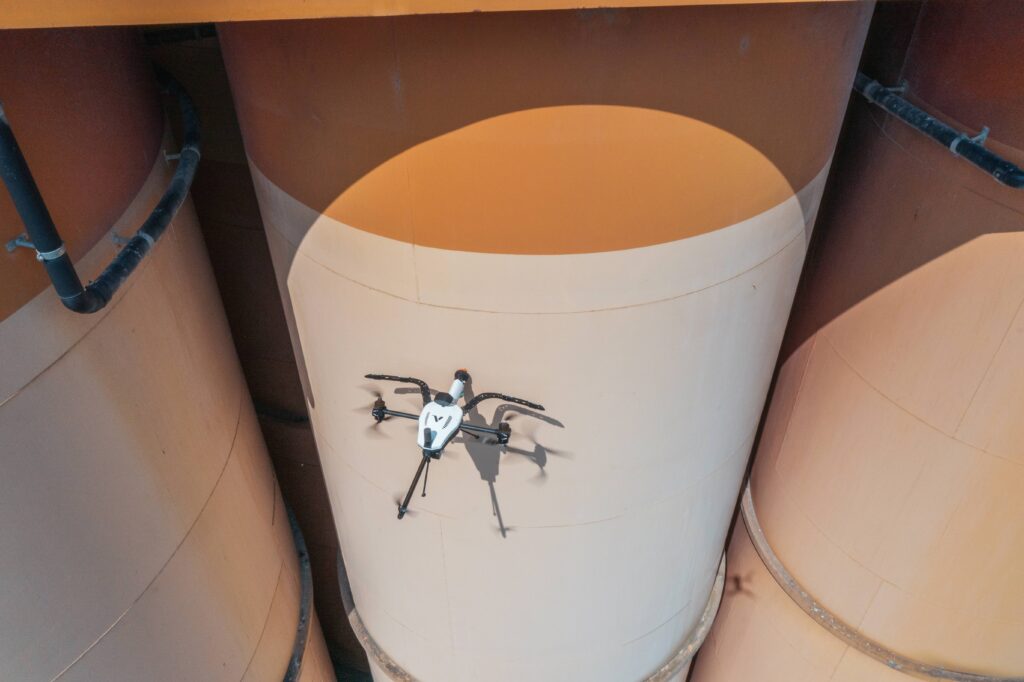
- Storage tanks
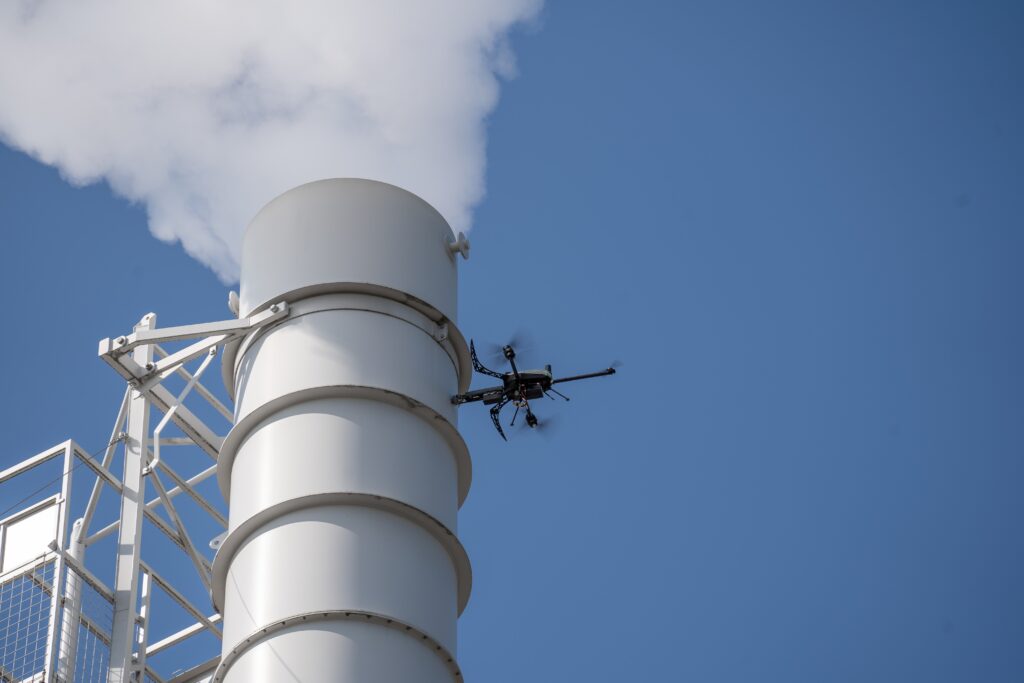
- Stacks and chimneys
- Boilers
- Silos and scrubbers
- Other structures where conventional access is difficult or costly
The technology is particularly applicable where inspection locations would otherwise require scaffolding, aerial lifts or rope access.
Reduced Access and Personnel Exposure
Aerial robotic NDE allows the inspection instrument to be brought directly to the measurement location without requiring personnel to physically access every inspection point.
For appropriate applications, this can reduce work at height, limit the use of temporary access systems and decrease the labor and coordination associated with conventional inspection access.
Reducing these requirements can improve inspection efficiency while limiting personnel exposure to elevated or difficult-to-access areas.
In-Service Inspection and Reduced Operational Impact
Certain NDE applications can also be performed while equipment remains in service.
High-temperature ultrasonic inspection, for example, can support wall-thickness measurements on operating equipment without requiring the asset to be cooled solely for inspection purposes. Where operating conditions and inspection requirements permit, this can reduce shutdown requirements and associated production impacts.
In-service inspection can also provide asset condition data prior to a scheduled outage or turnaround, helping maintenance teams better define repair scopes and plan work before equipment is taken offline.
Supporting Asset Integrity Decisions
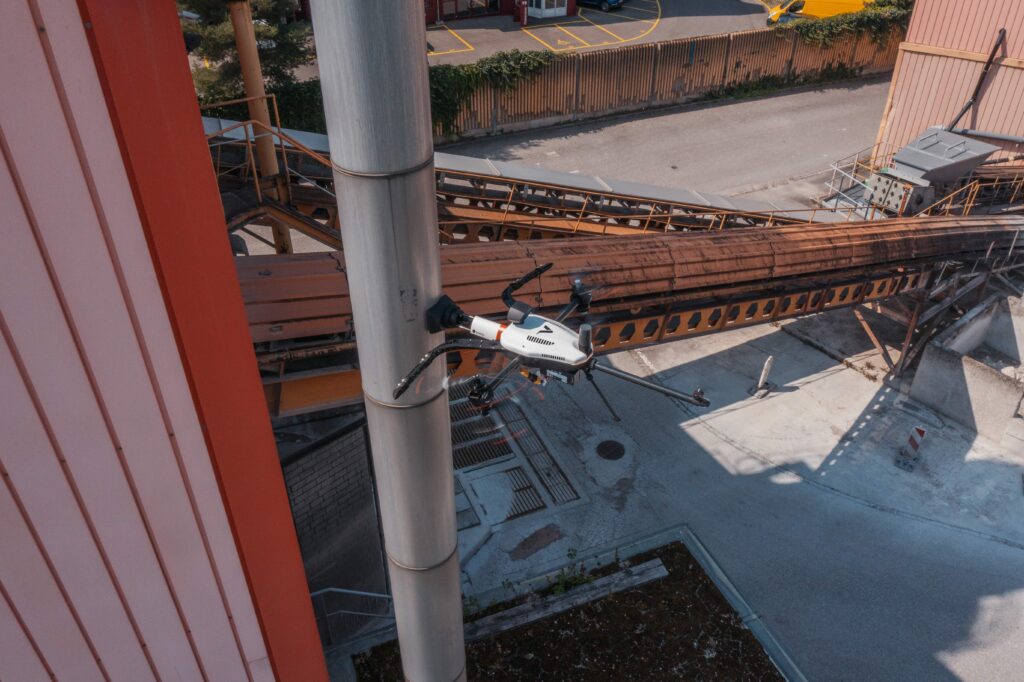
Aerial robotic NDE provides an additional inspection method for collecting condition data from locations where access may otherwise be a significant part of the inspection scope.
The technology complements CATSI’s existing Advanced NDE, Drone & Robotics and Asset Integrity services by combining specialized aerial access with established inspection methods.
Each application is evaluated based on asset geometry, operating conditions, anticipated damage mechanisms and inspection requirements to determine whether aerial robotic NDE is an appropriate inspection method.
For additional information regarding CATSI’s aerial robotic NDE capabilities and potential applications, contact CATSI to discuss your inspection requirements.