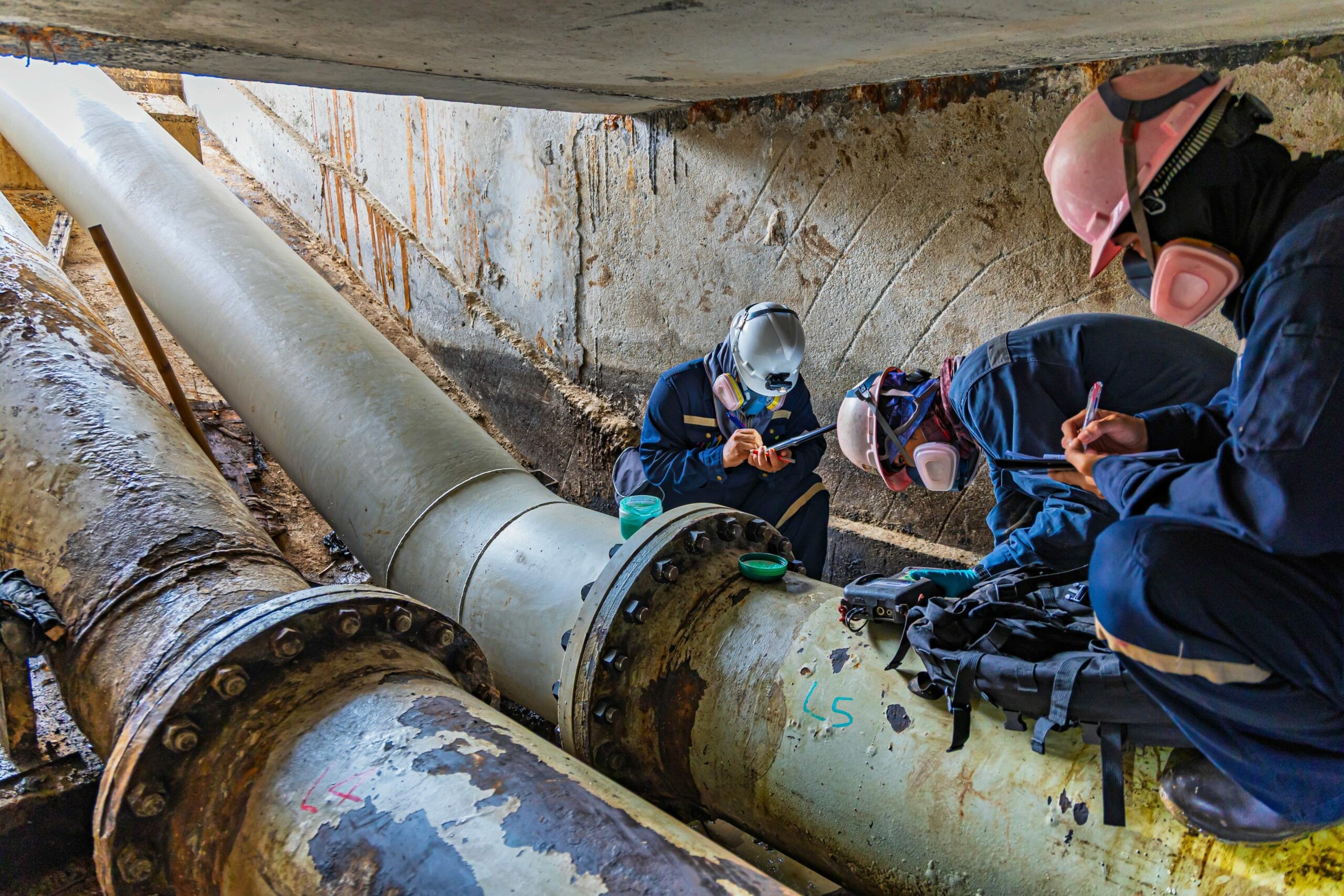
Industrial insulation performs an important job.
It can help maintain process temperatures, improve efficiency and protect personnel from hot or cold surfaces.
It can also make the surface underneath difficult to see.
When moisture reaches metal beneath an insulation system, corrosion can develop without the obvious visual warning signs associated with exposed equipment. The result is a well-known industrial integrity challenge called corrosion under insulation, or CUI.
What is corrosion under insulation?
Corrosion under insulation is deterioration that develops on metal surfaces beneath insulation.
Moisture can enter an insulation system through damaged jacketing, failed seals, penetrations, joints or other openings. Once water reaches susceptible metal and remains trapped, conditions can develop that support corrosion.
AMPP identifies CUI as an important concern in industries including chemical processing, refining, power and other industrial environments and emphasizes inspection, coatings, insulation condition and risk-based approaches as parts of CUI management. (AMPP)
Why is CUI difficult to detect?
The central challenge is visibility.
On an exposed steel component, corrosion may be readily observable. On insulated piping or equipment, the metal surface is covered.
An insulation system can therefore appear relatively normal from the outside while deterioration develops underneath.
That does not mean every damaged section of insulation indicates corrosion, and it does not mean every insulated component needs to be completely stripped for inspection.
Instead, facilities need ways to determine where closer evaluation is warranted.
Where can moisture come from?
Water can find its way into insulation systems in many ordinary ways.
Outdoor equipment is exposed to weather. Washdown activities can introduce moisture. Seals and jackets can become damaged. Penetrations and terminations create potential entry points.
Operating conditions can also contribute to condensation or repeated wetting and drying.
For that reason, CUI is not solely a corrosion problem. The condition of the entire insulation system matters.
AMPP notes that regular inspection of protective coatings and related systems can help identify existing deterioration and areas requiring repair or continued monitoring. (AMPP)
Does CUI inspection require removing all insulation?
Not necessarily.
Completely removing insulation from every component would often be impractical and disruptive.
Inspection programs can use information about operating conditions, materials, environment, previous findings and the condition of the insulation system to help prioritize where additional examination should occur.
Different nondestructive examination methods may also be appropriate depending on the asset and inspection objective.
The specific method matters, but so does selecting the right locations to inspect.
Why does inspection history matter?
One inspection provides information about a moment in time.
A strong asset-integrity program builds a history.
Where has moisture been found before? Which areas required repair? Has operating temperature changed? Are certain locations repeatedly exposed to weather or washdown?
Over time, that information can help teams make increasingly informed decisions about where attention should be focused.
CATSI provides asset-integrity, advanced NDE and multidisciplinary inspection services for industrial facilities, including mechanical, structural, electrical and related assets. (LinkedIn)
Frequently Asked Questions
What causes corrosion under insulation?
CUI can develop when moisture penetrates an insulation system, reaches susceptible metal and remains long enough for corrosive conditions to develop.
Can corrosion under insulation be seen from the outside?
Not always. Damage to jacketing or seals may provide clues, but the insulation itself can conceal the condition of the underlying metal, which is why targeted inspection is important.